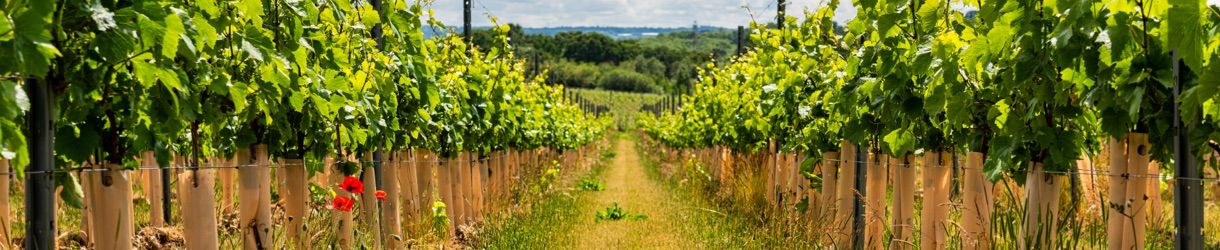
English Sparkling Wine
There are dozens of superb sparkling wines being made in England now and in fact over 70% of England's wine production is sparkling. English sparkling wines are winning major awards, gaining critical acclaim and international recognition. It's a premium product with world-class quality - time to toast with a home-grown flute of English fizz!
Discovering English Sparkling Wine
Champagne is of course a prestige wine, and it's usually what first pops into people’s heads when asked to think about sparkling wines. But, it may surprise you know that in the 18th century Champagne was a still wine - the first French document to mention Sparkling Champagne was in 1718, and refers to its emergence some 20 years earlier, but around 20 years earlier still, Sparkling Champagne was available in England and had become so popular that dramatists were enthusiastically singing its praises.
The very first mention of Sparkling Champagne in any language is in English – not French, when in 1676, Sir George Etherege wrote The Man of Mode.
The reason is because the English had the scientific knowledge to make sparkling wine and they used it to make French wine fizzy!
At that time the English were shipping in all wines in casks, and routinely bottling it themselves. French glass was too weak to withstand the second fermentation in bottle but in England they had discovered how to make tougher glass.
An Admiral during the reign of James I called Sir Robert Mansell, was concerned that wood-fired furnaces for making glass were jeopardising British ship building; if we didn't have enough oak to build ships it was endangering the security of the nation. So in 1615 he persuaded the King to issue a royal proclamation banning wood-fired furnaces. Coal was the only viable alternative – and this burned at a much higher temperature than wood, making glass vastly stronger.
Then, an attempt to make coloured glass by adding a combination of iron and manganese succeeded in strengthening it further still! This was the forerunner to modern bottle glass which English wine merchants started using in the early 1630’s - exactly one century before its commercial production in France, where it was known as Verre Anglais or “English Glass”!
And although Dom Perignon can be credited with inventing the classic Champagne blend of grapes, it's widely recognized that he spent most of his life trying to eradicate the bubbles that were appearing in his wines - because it was making the bottles explode! This suggests that he didn't understand why the bubbles were appearing in the first place. England had the answer to this too - it's actually acknowledged that sparkling wine was made in England before Champagne. A paper written by Christopher Merrit was presented to the newly formed Royal Society on the 17th December 1662, describing how to produce a sparkling wine [by adding sugar and molasses to intentionally kick off a second fermentation], and this was 30 years before France made their first sparkling Champagne and over 70 years before the oldest Champagne House was established - Ruinart in 1729.
The emergence of modern sparkling wine in England really began to take root in the 1970's. In 1976 Felsted in Essex and Pilton Manor in Somerset, were the first English vineyards to produce fizz, but the style didn't take off, and it wasn’t till 1983 when Carr Taylor and Lamberhurst were the only English sparkling wines available on a regular basis - but none of these wines were made with Champagne grape varieties. The first emphatic success was Nyetimber, who in 1996 launched their sparkling wine to such acclaim that within 12 months it was selected to be served at the Golden Wedding anniversary lunch of Queen Elizabeth II. Interestingly when the original owners of Nyetimber - an American couple called Stuart and Sandy Moss, wanted to fulfil their dream of creating a first-class English fizz from the classic Champagne grape varieties, the purported experts told them that there was no way that Chardonnay would ripen in the English climate, and Pinot Noir would just rot. But they followed their vision and planted anyway - with such amazing results that other producers soon followed suite and the English sparkling wine scene has just gone from strength to strength ever since.
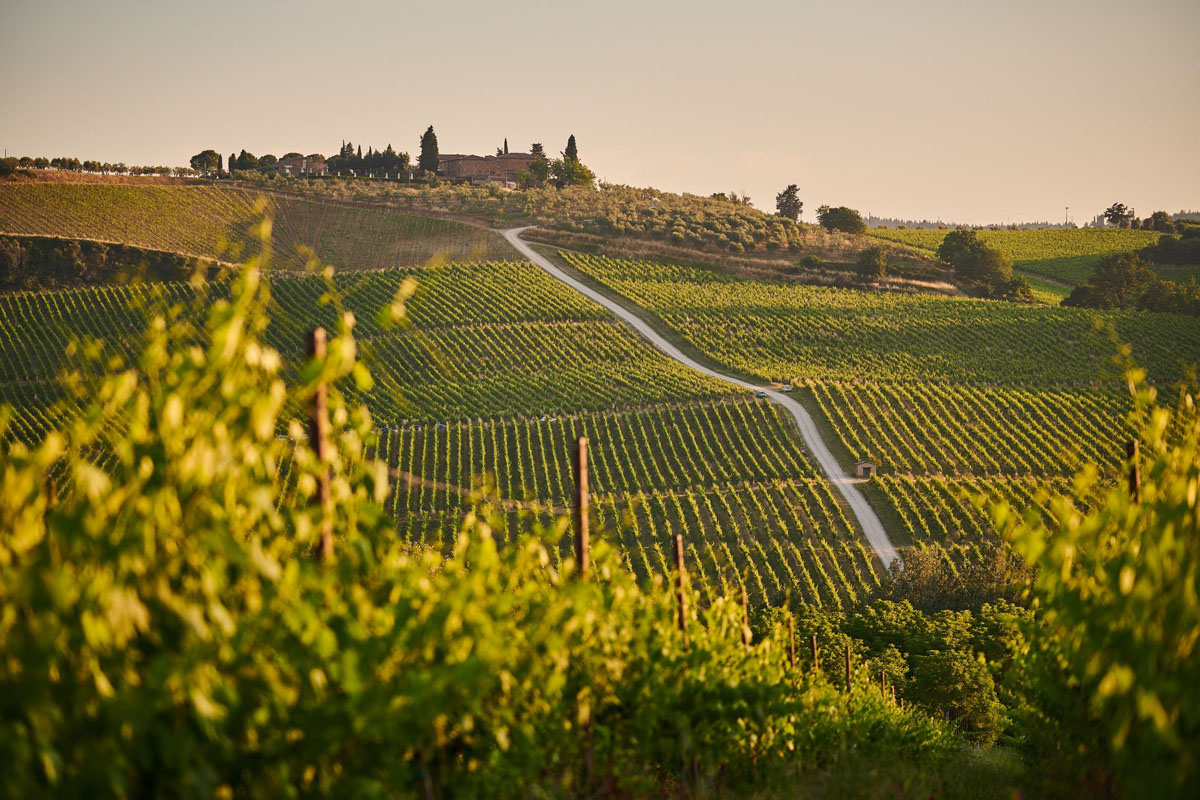
English Sparkling Wine Producing Regions and the Role of Terroir
English sparkling wines have become world-class in their own right and it's not about comparing them to Champagne any more, or come to that, even with each other; the wines reflect where the grapes have been grown and terroir has become intrinsic to their production.
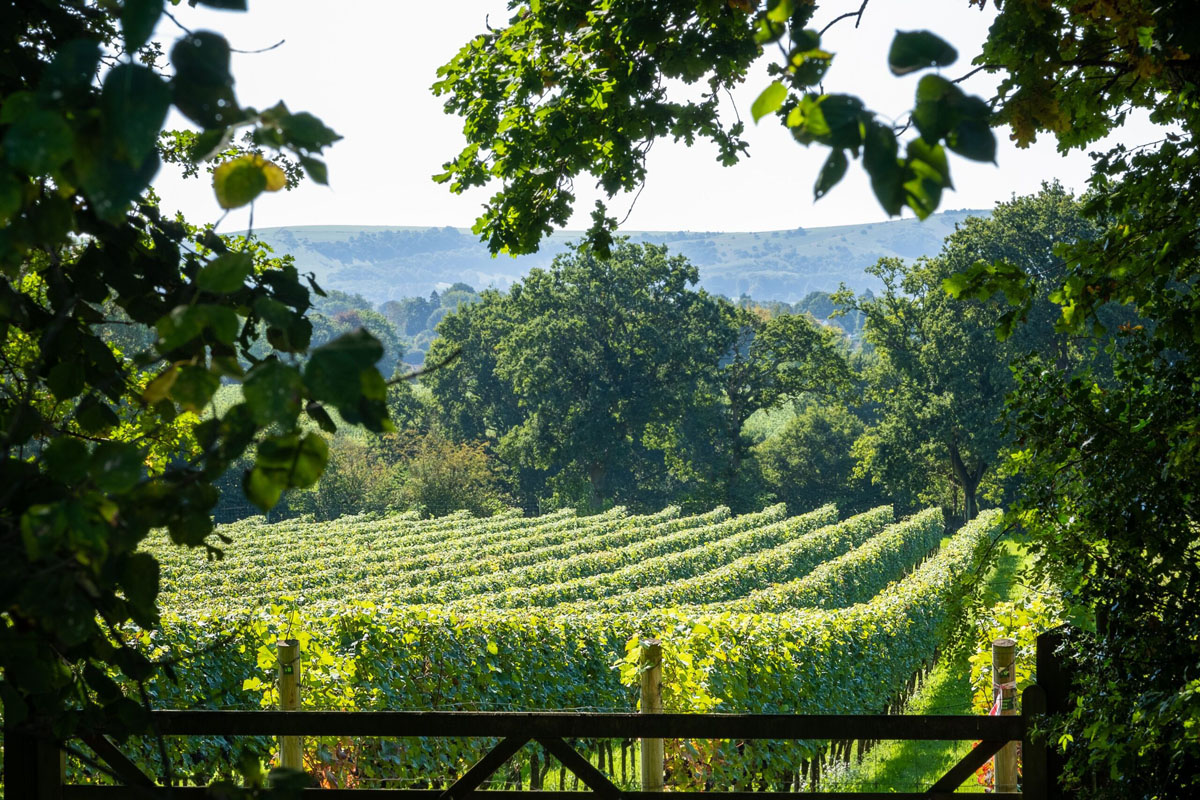
You will find a patchwork of diverse soils across England and vines are flourishing across the rolling hills of the country. Producers consider each plot's potential, evaluating not just the soil composition, but the slope gradient, aspect, altitude and microclimate which all contribute to the character and flavour nuances of the grapes; winemakers are vinifying each parcel separately which affords them more blending options and a greater portfolio of wines. So terroir isn't just about soil, it encompasses all the environmental factors that can affect a crop, like climate and terrain as well.
A comparatively cool climate is needed to produce the higher acidity in grapes that will produce sparkling wines with that characteristic crispness and refreshingly tangy bite.
The majority of English sparkling wines are produced in the South East of England which is roughly on the same latitude as Champagne where the climate is a mix of semi-continental and maritime, and has the same geological formation as Champagne, boasting the iconic alkaline chalky [chalk is a a type of limestone] soils which are actually an extension from the Champagne region and have great drainage. These mineral rich soils make elegant, crisp and vibrant wines with great acidity. Clay and sandy soils also feature across Sussex. Clay is a cold soil which retains moisture well and delays ripening. They are conducive to making quite robust and muscular wines with good acidity that have the ability to age well.
Sandy soils are warm and rich in minerals with excellent drainage. Warm soils promote ripening and produce soft, delicately elegant wines with high aromatics. Greensand is another characteristic; a type of sandstone which is found in a layer under chalk and exposed when chalk is eroded - it's perfect for sparkling wines.
Sussex is the epicentre of English sparkling wine with a registered PDO - Protected Designation of Origin - introduced in 2022 which covers both East and West Sussex.
The classic Champagne grape varieties, Chardonnay, Pinot Noir and Pinot Meunier, grow really well in Southern England and this has not gone unnoticed by the French, who have been buying up parts of the English countryside to establish vineyards.
In 2017 two Champagne Houses planted vines in England; Pommery founded their Pinglestone Estate in Hampshire, whilst Taittinger established Domaine Evremond in Kent.
Kent has a mixture of clay, shale, chalk and sandy soils.
Hampshire, where England's oldest commercial vineyard is located, [Hambledon] founded by Major General Sir Guy Salisbury-Jones in 1952 is planted on chalk.
Surrey boasts England's largest vineyard - Denbies whose vineyards feature chalk with a flint content.
East Anglia, which comprises Essex, Norfolk , Suffolk and Cambridgeshire has many vineyards planted on clay-based soils, and as clay soils hold water, they are ideal for the drier East Anglian climate. The Crouch Valley in Essex is one of the driest and warmest parts of England.
The Southwest of England is home to Cornwall's Camel Valley. This was the first English wine producer to be awarded a Royal warrant and it was also the first English vineyard to gain a PDO for a single vineyard site; their Darnibole vineyard has rich free-draining soil over ancient slate sub-soils.
England's most northerly vineyards are in Yorkshire; Leventhorpe's vines grow on free-draining sandy soils.
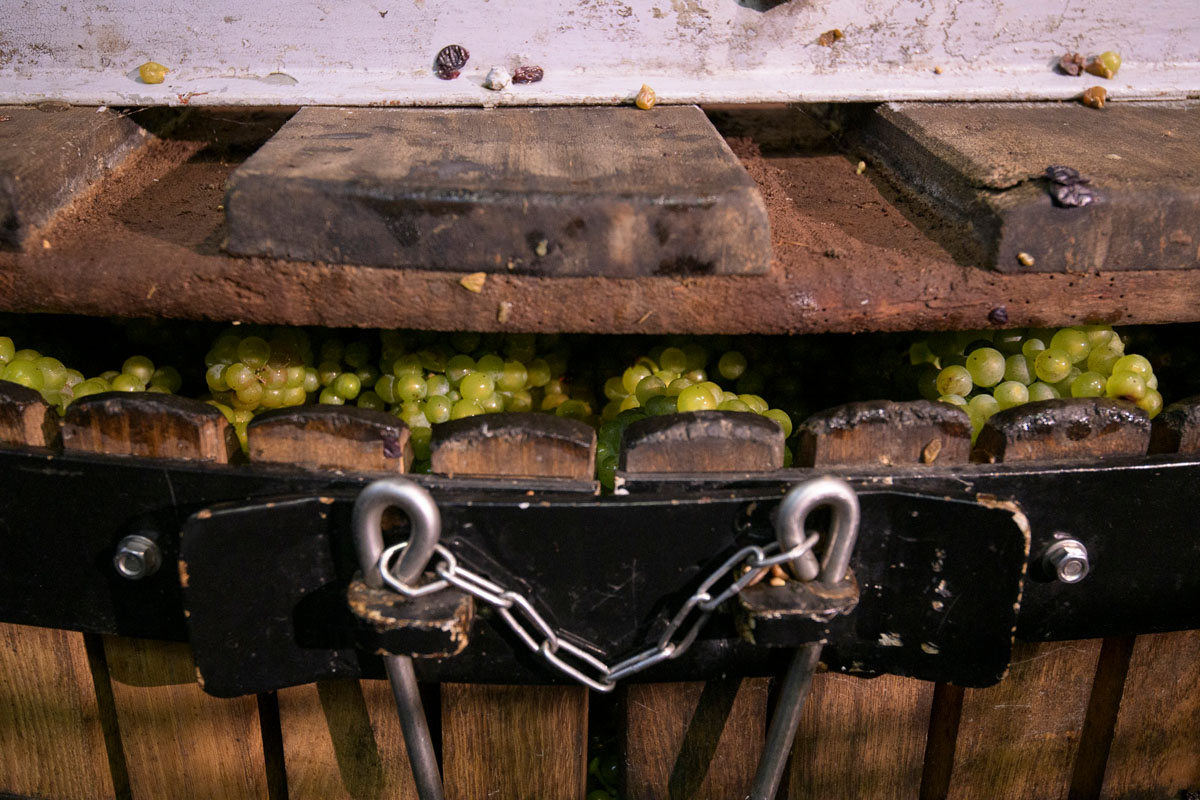
Prominent Grape Varieties in English Sparkling Wine
English fizz is largely made with the same classic grape varieties as Champagne - Chardonnay, Pinot Noir and Pinot Meunier; of these Pinot Noir and Pinot Meunier are the only black grapes. But Champagne can legally include five other white grape varieties in their cuvées - Arbane, Pinot Banc, Pinot Gris, Petit Meslier and most recently introduced in 2021 Voltis, a fungus-resistant hybrid - Presently there are no plantings of this grape in England, but watch this space!
Each variety brings something different to a sparkling wine, contributing their own personality which winemakers use in varying proportions to achieve their desired style.
Chardonnay
This versatile noble grape has natural high acidity. It gives elegance and finesse to sparkling wines providing a vibrant, fresh backbone. When young it displays an appley, citrus and floral profile, but Chardonnay can also enable sparkling wines to age gracefully developing multi-layered complexities.
Pinot Noir
This delicate variety gives power and structure to a wine with richer, weightier flavours of red berries.
Pinot Noir Précose
As its name suggests, this is an early ripening variant of Pinot Noir - so popular in cooler areas. It tends to be more expressive than standard Pinot Noir planted in the same place, giving more earthy and hedgerow flavours. Chapel Down in Kent and Court Garden in East Sussex use it in their wines.
Pinot Meunier
This variant of Pinot Noir tends to age more quickly than Pinot Noir and Chardonnay. It offers red berried fruitiness and roundness to a wine.
Some English producers make sparkling wines from 100% Pinot Meunier.
Arbane
This late ripener is extremely high in acidity. It delivers a lovely bouquet and brings fruity and floral notes to a wine. Court Garden in East Sussex grow this variety.
Petit Meslier
Has the ability to retain acidity in hot weather. It gives citrus and apple notes with vegetal nuances. Court Garden again grow this grape.
Pinot Blanc
Another variant of Pinot Noir, this variety makes full-bodied wines with vibrant acidity and a floral profile. Chapel Down in Kent use Pinot Blanc in some of their cuvées as do Carr Taylor in East Sussex, New Hall in Essex and Knightor in Cornwall.
Bsixtwelve in Hampshire make a 100% Pinot Blanc using the Ancestral sparkling wine method.
Pinot Gris
Yet another variant of Pinot Noir, this variety brings richness and fruitiness to a wine. Fox and Fox and Artelium, both in East Sussex, make sparkling wines with Pinot Gris, as do Greyfriars in Surrey, Balfour in Kent, Domaine Hugo in Wiltshire and Sandridge Barton in Devon [formally Sharpham].
Other Grapes
The following grapes are not allowed to be used for the coveted English Sparkling Wine category, but some producers are making sparkling wines from other varieties.
Bacchus, England's answer to Sauvignon Blanc is used by New Hall to make a Charmat Method sparkling wine, and blended with Chardonnay by Chapel Down to make a gently carbonated wine. Greyfriars use actual Sauvignon Blanc to make a bottle fermented wine!
For lovers of natural wines, Tillingham in East Sussex make a sparkler using the Ancestral Method from a blend of organically and biodynamically grown Ortega, Bacchus and Müller-Thurgau.
Breaky Bottom in East Sussex produce a Seyval Blanc sparkling wine, as do Hindleap, also in East Sussex. Hindleap also produce a red sparkling wine from 100% Merlot!
And they are not the only producer of sparkling red wines in England - Camel Valley in Cornwall make a Pinot Noir and Rondo blend. Hattingley Valley in Hampshire make one from Standard Pinot Noir and Pinot Noir Précose. Yorkshire Heart make one from 100% Rondo and Bolney in West Sussex produce a red sweet sparkling wine from Dornfelder!
Some producers use Reichensteiner, Madeleine Angevine and Auxerrois to make their sparkling wines, but perhaps the most unusual grape of all to be included in a cuvée is Pinotage! Leonardslee Wine Estate in West Sussex are owned by a South African family, and wanting to keep a little bit of their heritage have planted some Pinotage of which they add 10% to their Sparkling Rosé.
Methods of Sparkling Wine Production in England
Traditional Method
This is the classic method used for making Champagne, Crémant and Cava, where the second fermentation takes place in bottle followed by a period of time ageing on the lees before riddling and disgorgement. Biscuity, brioche and bread dough flavours come from lees ageing, and the longer the wine stays on the lees, the more pronounced these flavours become. Longer lees ageing also produces finer bubbles. The majority of English sparkling wine is made using this meticulous method, and a wine can only be labelled English Sparkling Wine if it has been made in the Traditional Method.
However, there are other methods of making a wine sparkling, which some producers are choosing to do.
Tank
Also known as Charmat, Cuvée Close or Martinotti. This is the method used for making Prosecco, where the second fermentation takes place in sealed tanks. It starts off life just like a Traditional Method sparkling wine, by fermenting a dry base wine first, then the wine is transferred to large sealed tanks and sugar and yeast are added to kick off the second fermentation. When this has been completed the wine is filtered under pressure to remove the sediment - so there is no riddling involved. The dosage is added and then the wine is bottled, again under pressure straight from the tank and can be sold straight away. This method produces fruity, and refreshing easy-drinking wines. They typically do not have the ageing potential of bottle fermented wines.
Fitz, based in West Sussex produce Charmat method wines.
Flint Vineyard in Norfolk make a Charmat method wine from a blend of Sauvignon Blanc and other aromatic grape varieties. They also make a rosé version from an exciting blend of Rondo, Pinot Noir, Bacchus, Cabernet Cortis, Reichensteiner, Dunklefelder and Pinto Blanc!
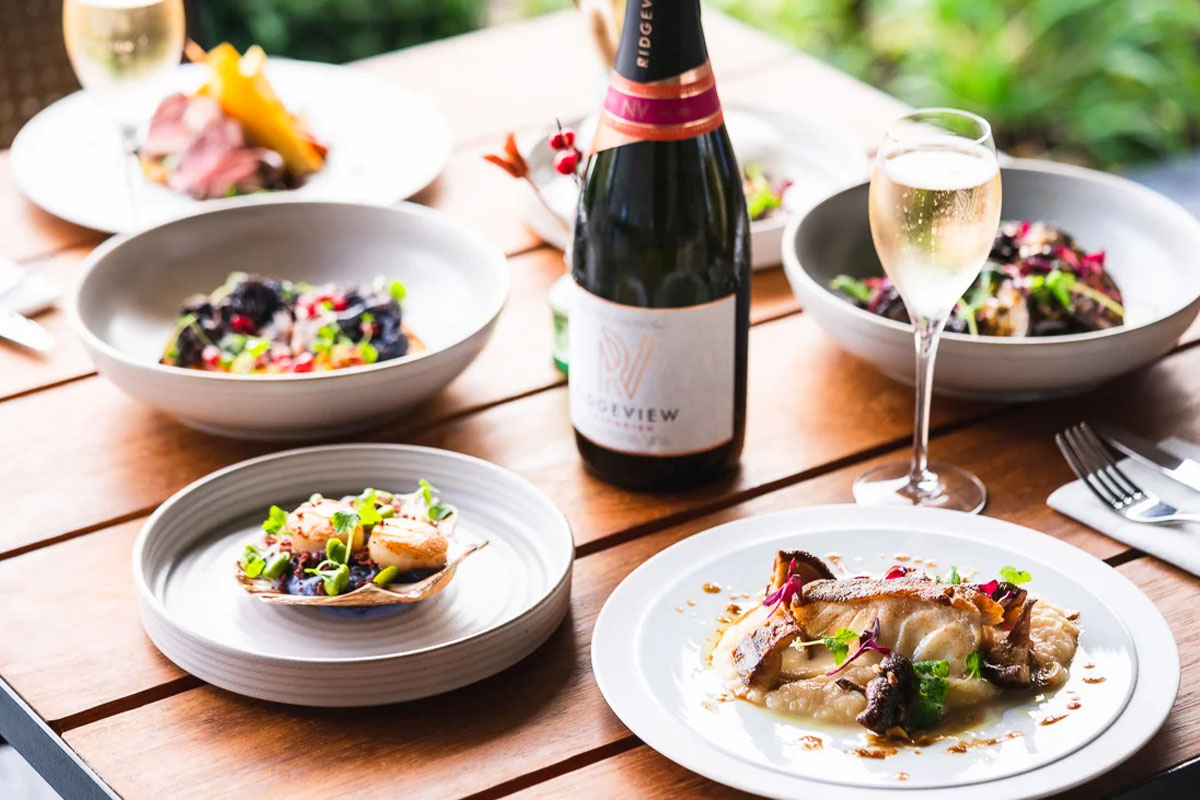
Ancestral, Pét-Nat and Col Fondo
The Ancestral Method, also called Pét-Nat - short for Pétillant Natural and Col Fondo, meaning “with the bottom” in Italian, is the oldest method in the world for making a wine sparkling, first documented in 1551 by the monks at the Abbey of St. Hillaire in the Languedoc region of Southern France. These wines are bottled before the fermentation process has finished, so they finish fermentation in the bottle, resulting in slightly fizzy and typically hazy wines because they are generally sold unfiltered and bottled with the lees. They are usually sealed with a crown cap instead of a cork stopper.
With more interest in pure and natural wines, this funky style of winemaking is really beginning to catch on.
Davenport, Tillingham and Domaine Hugo are among the English producers making Pét-Nat/Col Fondo wines.
Tim Wildman MW makes an unusual pink Pét-Nat called Lost in a Field “Frolic”, using a blend of six German cross heritage grape varieties.
The Ancestral Method produces wines with a light sparkle. They have low alcohol with no added sugar.
Carbonation
Also known as the Soda, or gas Injection Method. CO2 is used to carbonate still wines in a pressurised tank
This method produces light and fresh sparkling wines with large bubbles - they are a great alternative to Prosecco! As mentioned previously, Chapel Down produce a white and a rosé wine using this method.
Styles of English Sparkling Wine
Sparkling wines can be Non Vintage; made from a blend of different years, or Vintage, produced from the harvest of a single year.
You may also notice bottles displaying MV on labels now. This stands for Multi-Vintage; a term used on some labels in place of Non Vintage - BUT they are not the same - there is a difference - with Non Vintage wines, yes they are a blend of different years and they are created to ensure a consistent taste profile - the house style, so the taste will always be familiar to you - there is uniformity and you know what you are going to get year after year - but with Multi Vintage wines, they are still created from a blend of wines from different years, but you acknowledge that there may be a difference in taste and they aren't necessary created annually - this gives the winemaker more creativity, as they are not trying to create exactly the same wine year after year.
Blanc de Blancs
These are white wines made solely from white grapes [usually Chardonnay]. These elegant wines offer a distinct purity with a mineral quality.
Blanc de Noirs
White wines made from black grapes [usually Pinot Noir and Pinot Meunier, either blended or as a single varietal]. This style delivers full-bodied and rich wines.
Rosé
Nothing shouts summer more than a pink sparkling wine. Rosé wines can be made by assemblage or blending - adding a little still red wine from the local area to colour the wine pink, or by the saignée [Bleeding method]. Here the grapes are macerated for a time and then the pink juice is “bled off” and fermented. Saignée wines usually have a more intense colour than blended rosés and cost a little more as the method is more labour-intensive and time-consuming Hambledon in Hampshire uses the saignée method for one of their rosé sparkling wines, as do Bluestone in Wiltshire and Ridgeview in East Sussex.
Brut, Extra Brut and Non Dosage
Brut sparkling wines have between 6-12g of sugar per litre of wine. Extra Brut wines have less than 6g of sugar and Zero Dosage wines are bone dry with between 0-3g of sugar.
Demi-Sec
Sweet sparkling wines that contain between 32 - 50g of sugar per litre of wine. Nyetimber, Denbies, Carr Taylor and Raimes [Hampshire] all produce a demi-sec sparkling wine.
The Use of Oak
Brut sparkling wines have between 6-12g of sugar per litre of wine. Extra Brut wines have less than 6g of sugar and Zero Dosage wines are bone dry with between 0-3g of sugar.
Some producers are using oak barrels to age their sparkling cuvées to give more complexity and richer flavours to the finished wines; Sandridge Barton, Knightor and Hattingley Valley are some examples of wineries using oak.
Pairing English Sparkling Wine with Food
Sparkling wine is extremely versatile; it isn't just for aperitifs but can pair well with many types of foods and may even be used for sparkling cocktails.
NV or MV sparkling wines pair wonderfully with smoked salmon and salty - cheesy canapés because salt makes sparkling wines seem less acidic and more rounded.
Fish, shellfish and sushi are all great with dry sparkling wines, they have a natural affinity with smoked fish due to their backbone of acidity, and they are lovely with smoked salmon pâtés
Scallops and lobster are particularly good with Blanc de Blancs wines. If your'e pushing the boat out - then caviar is a match made in heaven - you could even try an English caviar produced in Exmoor!
That good old English favourite fish and chips is a winner with sparkling wines - the acidity cuts through the greasiness of the batter, cleansing the palate. So most fried oily and fatty dishes will pair well.
Spicy food loves the bubbly effervescence of sparkling wines which harmonise well with spice and cleanse the palate between mouthfuls.
Sparkling wines can be a big hit with cheese, as their high acidity cuts through the creaminess. Try a Blanc de Noirs with hard cheeses and a Blanc de Blancs with soft.
They are also good with Citrus dressed salads and fresh tomato dishes because their natural high acidity brings out the citrus notes in the food and generally acidic wines pair well with acidic foods.
Blanc de Noirs wines are superb with mushroom dishes.
Rosé sparkling wines are surprisingly good with duck and lamb, contrasting nicely with the rich meat. They are also great with desserts featuring red berries.
Demi-sec sparkling wines pair nicely with fresh fruit desserts and pavlovas and are also good with lightly spiced dishes.
Ancestral method wines are brilliant with oysters.
Take a tip from the French who serve Champagne throughout their meals, matching the style of wine to the dish.
Future Trends in English Sparkling Wine
Winemaking in England has a lot of challenges - it's one of the coolest of the cool climate wine regions, right on the margins of where grapes will ripen, and could also very well be one of the wettest! Grapes will only ripen between 30 and 50 degrees latitude either side of the equator in the northern and southern hemispheres, and England's summers are notoriously unpredictable! But with global warming gradually making English summers more grape friendly, English wines does have a real future, especially in Southern England where English sparkling wines are leading the way, frequently triumphing over Champagne in competitions.
English winemakers are an innovative lot, as wineries establish they build up their stock of reserve wines, and we can expect to see sparkling cuvées with older reserve wine constituents in their blends which will enrich the flavours and Prestige Cuvées like Roebuck's [in West Sussex] Rare Expressions Range.
And we may well see the emergence of more PDO's, guaranteeing the unique quality and provenance for other English regions.
Conclusion
The English wine industry is rapidly growing, along with its reputation; this is a dynamic time for English sparkling wine and exciting times lie ahead. England is a small country, but the future looks big - and it looks effervescent!